
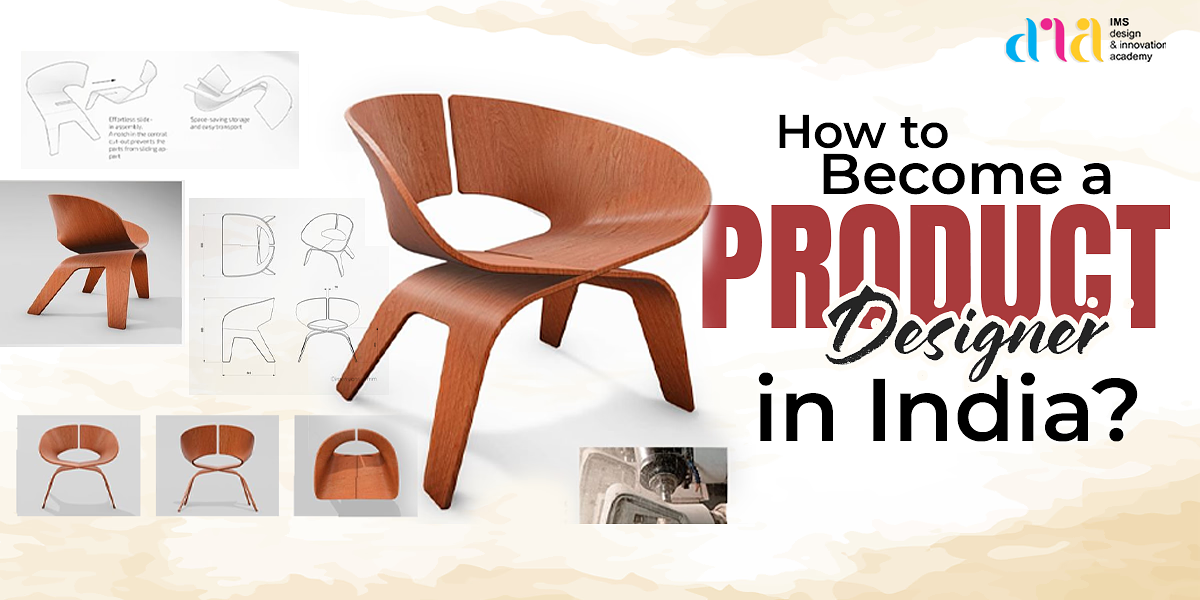
Every day, you use apps, websites, and digital products that feel simple and easy to navigate. Behind these seamless experiences is a product designer who focuses on solving real user problems. If you’re exploring a career in this field, choosing the right product design college in Noida can help you build the skills needed to create such intuitive and impactful digital experiences.
If you are wondering how to become a product designer in India, you are not alone. Many students get confused between roles like UI, UX, and product design. The path may seem unclear at first, but it becomes structured once you understand the basics.
A product designer creates user-focused digital or physical products by combining creativity with problem-solving. In India, freshers can earn around ₹5-10 LPA, while experienced designers can earn ₹15-40 LPA or more. Depending on your learning path, it can take 6 months to 4 years to enter this field.
With growing demand in startups and tech companies, product design is a strong and rewarding career option in India.
In Short:
- Learn design basics, tools, and user research
- Build a strong portfolio with real projects
- Degree like B Des Product Design helps but is optional
- Takes 6 months to 4 years depending on path
- High demand career with strong salary growth in India
What is Product Design?
Product design is the process of creating solutions that solve user problems effectively while being functional, visually appealing, and easy to use. It combines creativity, technology, and business thinking to design products that people love.
In simple terms, product design is about understanding users, identifying their pain points, and designing solutions that improve their experience.
Real-life examples include:
- Designing a food delivery app interface
- Creating a smart wearable device
- Improving the checkout experience on an e-commerce website
Many people confuse product design with UI and UX. While they are related, they are not the same:
- UI (User Interface) focuses on visual elements like buttons, colors, and layouts
- UX (User Experience) focuses on usability and how users interact with a product
- Product design combines both UI and UX, along with strategy and problem-solving
If you pursue a bachelor of product design, especially a B Des Product Design, you’ll learn how to design products from scratch, covering research, ideation, prototyping, and testing. This also opens pathways for a career in luxury product design, where creativity meets premium craftsmanship and user experience.
Product design is not just about making things look good, it’s about making them work better for users.
See If You’re Made for Design - Take the IMS DIA Design Aptitude Test
Register NowWhat Does a Product Designer Do?
Understanding the role is essential when exploring how to become a product designer. A product designer works across the entire lifecycle of a product, from identifying user problems to designing and improving solutions. Their goal is to create user-centric products that align with business goals.
Roles & Responsibilities
- Conduct user research and understand user behavior
- Define product problems and opportunities
- Create wireframes, prototypes, and final designs
- Collaborate with developers, product managers, and stakeholders
- Test designs and improve based on feedback
Daily Workflow:
A typical day may include:
Step 1: Researching user needs or analyzing data
Step 2: Designing screens using tools like Figma
Step 3: Attending team meetings and feedback sessions
Step 4: Iterating on designs based on testing
End-to-End Process:
- Problem identification
- User research
- Ideation and brainstorming
- Wireframing and prototyping
- Testing and validation
- Final design delivery
Whether you come from a B Des Product Design background or self-learning, mastering this workflow is key. This hands-on process is what makes product design a dynamic and impactful career.
Product Designer Salary in 2026 in India
One of the biggest motivations for learning how to become a product designer is earning potential. The product designer salary in India is quite competitive and grows significantly with experience.
Salary by Experience:
| Experience Level | Average Salary (India) |
|---|---|
| Fresher (0-2 Years) | ₹5-10 LPA |
| Mid-Level (3-6 Years) | ₹10-20 LPA |
| Senior (7+ Years) | ₹20-40+ LPA |
Fresh graduates from a bachelor of product design or B Des Product Design programs often start at higher packages if they have strong portfolios.
Company-wide Variation:
- Startups: ₹6-18 LPA (fast growth, more responsibility)
- Mid-size companies: ₹10-25 LPA
- Top tech companies: ₹20-40+ LPA
Freelance vs Job:
Freelancing is also a viable path:
- Beginners: ₹20,000-₹50,000 per project
- Experienced freelancers: ₹1-5 lakh per project
While full-time jobs offer stability, freelancing offers flexibility and higher earning potential over time.
The key factor influencing salary is not just your degree but your portfolio, skills, and problem-solving ability. This is why even those without a B Des Product Design degree can earn well if they build strong practical experience.
Step-by-Step Guide to Become a Product Designer in 2026
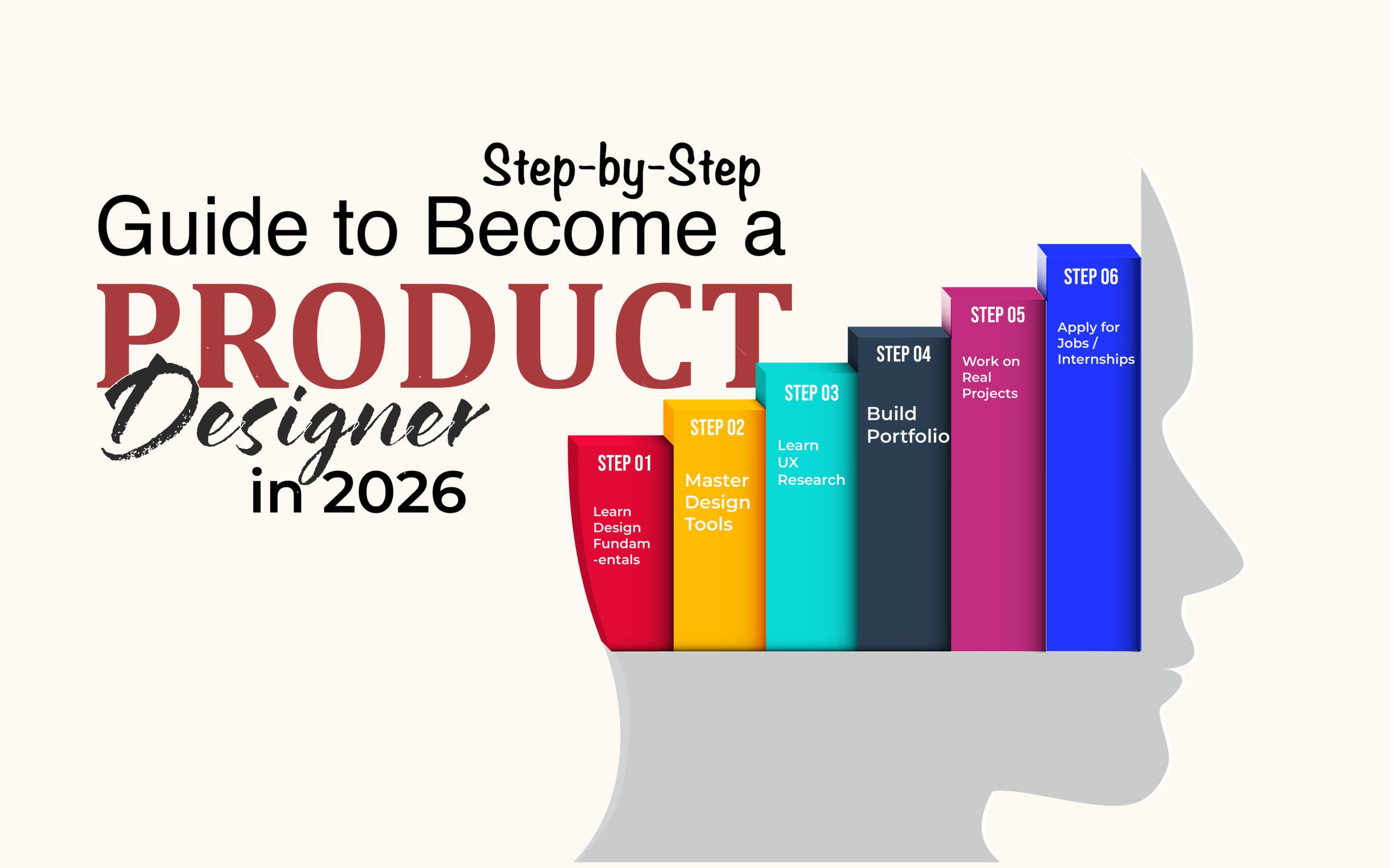
Step 1: Learn Design Fundamentals
Every strong product designer starts with a solid foundation. If you’re serious about how to become a product designer, this is where your journey begins. Design is not just about aesthetics; it’s about solving problems visually and functionally.
Start by understanding core principles such as color theory, typography, layout, spacing, and visual hierarchy. Alongside this, develop a mindset for user-centered design, where every decision is based on user needs and behavior.
You can learn these fundamentals through:
- A formal degree like a bachelor of product design or B Des Product Design
- Online courses, design books, and tutorials
- Observing and analyzing real-world products
The goal is to understand why a design works, not just how it looks. This clarity will help you make informed design decisions as you progress further.
Step 2: Master Design Tools
Once your fundamentals are clear, the next step in how to become a product designer is learning the tools that bring your ideas to life. Tools are essential for execution, but they should support your thinking, not replace them.
Start with beginner-friendly tools like Figma, which is widely used for UI design and prototyping. As you progress, you can also explore 10 AI tools for designers to enhance your workflow, speed up repetitive tasks, and improve creativity while solving real design challenges.
Focus on practicing:
- Creating wireframes and layouts
- Designing high-fidelity screens
- Building interactive prototypes
While learning tools, avoid the common mistake of focusing only on features. Instead, use them to solve real design problems. This ensures your learning stays practical and aligned with industry expectations.
Step 3: Learn UX Research
With tools in place, the next step is to understand users deeply. A key part of how to become a product designer is learning how to design for people, not assumptions.
UX research helps you uncover real user problems and design meaningful solutions. Without this step, even visually appealing designs can fail.
Key methods to learn include:
- User interviews to gather insights
- Surveys to identify patterns
- Usability testing to validate designs
This step connects directly with your design decisions. The insights you gather will guide your ideas, making your work more effective and user-focused. Whether you follow a B Des Product Design path or self-learning, research skills will significantly strengthen your profile.
Step 4: Build Portfolio
After learning fundamentals, tools, and research, you need a way to showcase your skills, and that’s your portfolio. This is the most crucial step in how to become a product designer because it directly impacts your job opportunities.
A strong portfolio should not just show final designs but also your thinking process. Recruiters want to understand how you approach problems and arrive at solutions.
Include:
- 3-5 detailed case studies
- Clear problem statements and user insights
- Step-by-step design process
- Final outcomes and learnings
If you are pursuing a bachelor of product design, include your academic projects. Otherwise, create self-initiated projects or redesign existing products. Focus on clarity, storytelling, and logical flow. Each project should answer one key question: How did you solve the problem?
Step 5: Work on Real Projects
Once your portfolio has initial projects, the next step is to apply your skills in real-world scenarios. This is where your understanding of how to become a product designer becomes practical.
Real projects expose you to constraints, feedback, and collaboration-things that structured learning often cannot fully simulate.
You can gain experience through:
- Freelance projects
- Internships
- Collaborations with developers or startups
Working on real problems helps you improve faster. It also strengthens your portfolio with practical case studies, making you more job-ready.
Step 6: Apply for Jobs / Internships
With a solid portfolio and some real-world experience, you are ready to enter the job market. The final step in how to become a product designer is strategically applying for opportunities.
Start by targeting roles such as internships, junior product designer positions, or freelance work. Your focus should be on getting your first break and gaining industry exposure.
To improve your chances:
- Tailor your resume and portfolio for each application
- Highlight your best and most relevant projects
- Actively network on platforms like LinkedIn
- Reach out to designers and recruiters for feedback
Rejections are a normal part of the process. Instead of getting discouraged, use them as learning opportunities. Keep refining your portfolio, improving your skills, and applying consistently while exploring schemes and policies for design students that may offer additional opportunities and support.
Over time, your persistence will pay off, helping you successfully transition into a product design career.
Confused, How to Build a Product Design Portfolio? Talk to a counselor
Get a Call BackBest Product Design Courses in 2026 in India
Online Courses:
Online courses are a flexible way to learn how to become a product designer, especially for students exploring product design courses after 12th without committing to a full-time degree. Platforms like Coursera, Udemy, and Google UX programs offer structured learning.
These courses cover design fundamentals, tools, and UX research. They are ideal if you don’t want to commit to a full-time bachelor of product design.
Many courses include hands-on projects, which help build your portfolio. The key is to choose courses that focus on practical learning rather than just theory.
Offline Institutes:
If you prefer a structured academic path, consider a B Des Product Design from reputed institutes or design colleges.
A bachelor of product design typically lasts 4 years and provides in-depth training in design thinking, prototyping, and user research.
These programs also offer exposure, internships, and industry connections, which can be valuable for placements.
What to Look for in a Course:
- Practical projects and portfolio building
- Industry-relevant curriculum
- Mentorship and feedback
- Placement support
Choosing the right course depends on your goals, time, and budget.
Skills Required to Become a Product Designer in 2026
To truly understand how to become a product designer, you need to build a strong combination of technical skills and human–centered thinking. Product design is not just about visuals, it’s about solving real problems effectively.
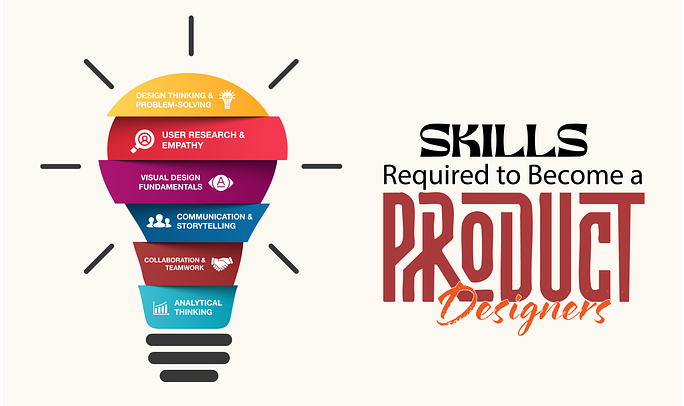
Key Skills You Need:
1. Design Thinking & Problem-Solving: This is the core of product design. You need to identify problems, break them down, and create logical, user-friendly solutions. It involves ideation, testing, and continuous improvement.
2. User Research & Empathy: A good product designer understands users deeply. This means learning how to conduct interviews, analyze user behavior, and design based on real needs.Empathy helps you create solutions that actually matter.
3. Visual Design Fundamentals: You should have a strong grasp of layout, typography, color theory, and spacing. These elements help make your designs not only functional but also visually appealing and easy to use.
4. Communication & Storytelling: Designers must clearly explain their ideas to teams and stakeholders. Storytelling helps you present your design decisions in a structured and convincing way, especially in portfolios and meetings.
5. Collaboration & Teamwork: Product designers rarely work alone.You’ll collaborate with developers, product managers, and marketers. Being open to feedback and working well in teams is essential.
6. Analytical Thinking: Design decisions are often backed by data. You should be able to interpret metrics, user feedback, and testing results to improve yourdesigns.
Even if you pursue a B Des Product Design, continuous learning and skill development are necessary to stay relevant in this fast-evolving field.
Tools Every Product Designer Must Learn
When learning how to become a product designer, tools help you bring your ideas to life. However, tools are only as powerful as the thinking behind them.
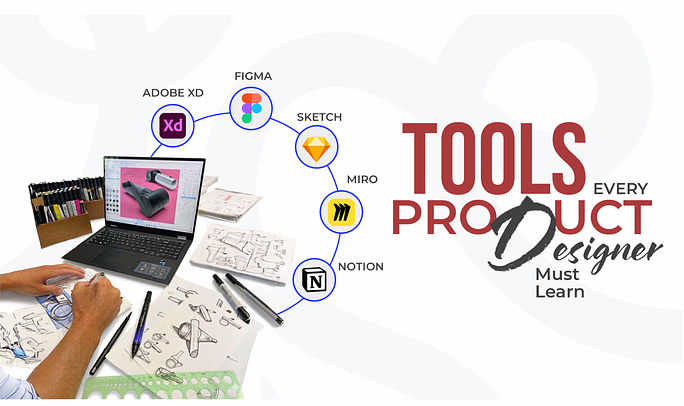
Essential Tools for Product Designing & How They Help:
1. Figma
Figma is one of the most widely used design tools today. It allows you to create UI designs, wireframes, and interactive prototypes-all in one place. Its real-time collaboration feature makes it ideal for teams working together on the same project.
2. Adobe XD
Adobe XD is another popular tool for interface design and prototyping. It is especially useful for designers already familiar with Adobe products. It offers smooth integration with tools like Photoshop and Illustrator.
3. Sketch
Sketch is a powerful UI design tool used mainly on Mac. It is preferred by many advanced designers for its flexibility and plugin ecosystem, although it is less commonly used now compared to Figma.
4. Miro
Miro is not a design tool but a collaboration and brainstorming platform. Designers use it to map user journeys, create flow diagrams, and organize ideas visually during the research and planning stages.
5. Notion
Notion is used for documentation and workflow management. Product designers use it to organize research, track projects, and maintain design systems or notes.
What You Should Focus On?
Instead of trying to master every tool, start with one, preferably Figma, and build strong fundamentals. Once you’re comfortable, you can expand your toolkit based on your needs.
Remember, tools are just enablers. Your ability to think, solve problems, and design meaningful experiences is what truly defines your success as a product designer.
How to Build a Product Design Portfolio?
If you’re serious about how to become a product designer, your portfolio is not just important, it’s essential. Before showcasing your work, you need to understand how to build a strong product design portfolio from scratch.
Start by identifying 3-5 projects that demonstrate your ability to solve real problems. If you don’t have professional experience, you can:
- Redesign existing apps or websites
- Work on hypothetical problem statements
- Take up freelance or personal projects
Once you have your projects, focus on structuring them properly. A portfolio is not just about final screens,it’s about showing your thinking and process. Each project should clearly explain the journey from problem to solution.
Case Study Structure for Product Design Portfolio
Each project should include:
- Problem statement
- Research insights
- Design process
- Final solution
- Results or learnings
You can showcase your portfolio on:
- Personal website
- Behance
- Dribbble
What Recruiters Look for in Product Design Portfolio:
- Clear thinking and problem-solving
- Strong visual design
- Real-world application
- Ability to explain decisions
If you are pursuing a bachelor of product design, it’s important to use your academic projects strategically to showcase your skills. Focus on presenting well-structured case studies that highlight your design thinking, research process, and problem-solving approach. This is essential when understanding how to create a product design portfolio that stands out to recruiters. If you don’t have enough academic work, consider developing self-initiated projects that reflect real-world challenges and innovative solutions. Remember, quality always outweighs quantity. A few strong, impactful case studies are far more effective than including numerous weak ones.
Career Opportunities After Product Design
After understanding how to become a product designer, the career opportunities available are diverse and continuously growing. Product design is not limited to one role or industry, it opens doors across the entire digital ecosystem.
Job Roles after Product Designing Course:
One of the biggest advantages of product design is role flexibility. As a beginner, you may start as a Product Designer, where you work on end-to-end product experiences, combining research, UX, and UI.
You can also specialize based on your strengths. For example, a UX Designer focuses more on user research, user journeys, and improving usability, while a UI Designer works on visual elements like layouts, typography, and interface design.
Another role is an Interaction Designer, where the focus is on how users interact with a product, animations, transitions, and overall flow. These roles often overlap, and many companies expect designers to handle multiple aspects.
Industries to Work in After Product Designing Course:
Product designers are in demand across a wide range of industries because every digital product needs thoughtful design.
- Tech companies hire product designers to build apps, platforms, and software products
- Startups offer dynamic roles where designers work closely with founders and influence product decisions
- E-commerce companies need designers to improve shopping experiences and conversion rates
- Fintech focuses on designing secure and user-friendly financial products
- Edtech requires designers to create engaging and accessible learning experiences
This variety allows you to choose an industry that aligns with your interests and career goals.
Growth Paths in Product Design Field:
With experience, your career can grow in multiple directions. You may progress to a Senior Product Designer, where you handle complex projects and mentor junior designers. From there, you can move into leadership roles like Design Lead, managing teams and driving design strategy.
Some designers transition into Product Manager roles, where they combine design understanding with business and strategy.
Alternatively, you can choose independent paths such as freelancing or starting your own design consultancy. These options offer flexibility and the opportunity to work with multiple clients across industries.
Overall, product design offers both stability and flexibility, making it a strong long-term career choice.
See If You’re Made for Design - Take the IMS DIA Design Aptitude Test
Register NowConclusion
Understanding how to become a product designer is about combining creativity, problem-solving, and consistent practice. Whether you choose a bachelor of product design like a B Des Product Design from a reputed design institute in Noida or follow a self-taught route, the journey requires dedication and hands-on learning.
The product designer salary in India and career growth make it a rewarding choice, especially in today’s digital-first world. While how long it takes to become a product designer depends on your path, what truly matters is your portfolio and real-world experience.
Start small, stay consistent, and focus on solving real problems. With time, you can build a strong and successful career in product design.
FAQs
1. What is the eligibility to become a product designer in India after 12th?
To become a product designer in India after 12th, there is no strict eligibility. Students from any stream can enter this field. Many choose a B.Des in Product Design or similar courses to learn fundamentals, but it is not compulsory. You can also start with online courses and build skills. What matters most is your portfolio, creativity, and problem-solving ability.
2. Can I become a product designer in India without a degree or design background?
Yes, you can become a product designer without a degree or design background. The industry focuses more on skills and portfolio than formal education. You need to learn UI UX, product thinking, and user research, then build real projects. Freelancing, internships, and startup work can help you gain experience and enter the field.
3. What skills are required to become a product designer in India?
To become a product designer, you need skills like design thinking, problem-solving, and user research. You should also understand UI UX basics such as layout, typography, and color. Communication, teamwork, and analytical thinking are important because designers work with teams and improve products based on user data.
4. Which tools should beginners learn to become a product designer in India?
Beginners should start with tools like Figma, which is widely used for UI design and prototyping. Other tools include Adobe XD, Sketch, Miro, and Notion. It is better to focus on mastering one tool first and then expand. Tools help execution, but strong design thinking is more important.
5. Which companies are hiring product designers in India?
Many companies in India are hiring product designers across tech and startup ecosystems. Top recruiters include Google, Microsoft, Amazon, Flipkart, Swiggy, and Paytm. Startups and SaaS companies also offer many opportunities.
6. What is the future scope of product design in India?
The future scope of product design in India is strong due to growing digital products and startups. Companies are investing in better user experience, which increases demand for designers. Career growth is high with roles like product designer, UX designer, and design lead. Salaries are also competitive and increase with experience.
