
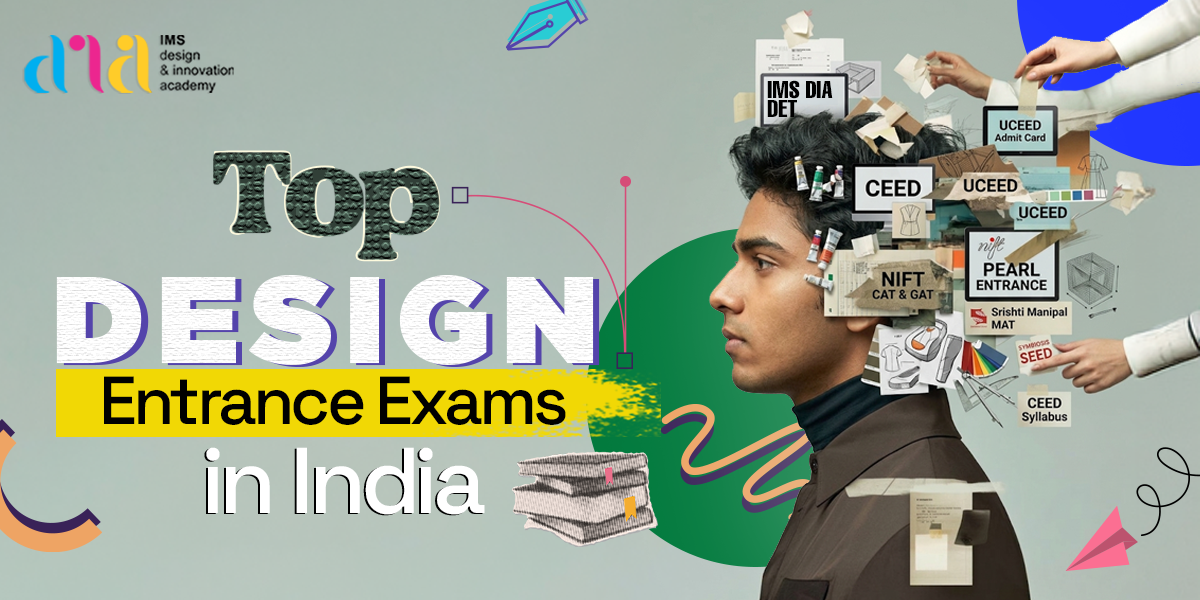
Planning to pursue B.Des or another undergraduate design course after Class 12? The 2027 admission cycle includes several design entrance exams in India, including NID DAT, NIFT, UCEED, MITID DAT, SEED, Pearl Academy Entrance Exam and other institute-level tests.
The right exam depends on your preferred design specialisation, eligibility, preferred institute and the type of assessment you are comfortable with. Some exams focus heavily on creative problem-solving and visualisation, while others combine design aptitude with reasoning, general ability, studio tests or interviews.
This guide covers the top design entrance exams in India 2027, including important dates, registration timelines, eligibility, exam pattern, syllabus, selection process and preparation tips.
Design Entrance Exams in India 2027: Important Dates
| Exam | Level | Application Starts | Last Date to Apply | Exam Date | Result / Next Stage |
|---|---|---|---|---|---|
| NID DAT 2027 | UG/PG | Check official schedule | 30 Nov 2026 | 20 Dec 2026 | Check official schedule |
| NIFT 2027 | UG/PG | To be announced | To be announced | To be announced | To be announced |
| UCEED 2027 | UG | To be announced | To be announced | 17 Jan 2027 | To be announced |
| MITID DAT 2027 | UG/PG | 17 Sep 2026 | 28 Feb 2027 | 4 Apr 2027 | 22 Apr 2027 |
| SEED 2027 | UG | To be announced | To be announced | To be announced | To be announced |
| Pearl Academy 2027 | UG/PG | Applications open | 18 Jan 2027 | 22-24 Jan 2027 | Interview: 28-31 Jan 2027 |
| IMS DIA DAT | UG | Admissions open | As per admission cycle | Multiple Admission Cycles | Admission Process+Interaction |
| AIEED 2027 | UG/PG | 1 Oct 2026 | 10 Dec 2026 for Series I | As per screening schedule | Batch starts 26 Jul 2027 |
Design Entrance Exam Registration 2027: Application Status
| Exam | Application Starts | Last Date to Apply | Current Status |
|---|---|---|---|
| NID DAT 2027 | 10 September 2026 | 30 November 2026 | Applications Open |
| NIFT 2027 | December 2026, tentative | January 2027, tentative | To be announced |
| UCEED 2027 | 1 October 2026 | 31 October 2026 | Upcoming |
| MITID DAT 2027 | 17 September 2026 | 28 February 2027 | Applications Open |
| SEED 2027 | August 2026, tentative | December 2026, tentative | Applications Open / Ongoing |
| Pearl Academy 2027 | November 2026 | January 2027 | Applications Open |
| IMS DIA D-DAT 2027 | Admissions Open | As per admission cycle | Admissions Open |
| AIEED 2027 | 1 October 2026 | 10 December 2026 for Series I | Applications Open |
Note: Application deadlines and examination schedules can change during the admission cycle. The dates above reflect the latest available 2027 information and should be updated whenever a new official notification is released.
Top Design Entrance Exams in India 2027
1. IMS DIA Design Aptitude Test
IMS DIA Design Aptitude Test is an entrance exam conducted by IMS Design and Innovation Academy for admission to its undergraduate design programmes. The test evaluates a candidate’s creativity, observation skills, visual thinking, and conceptual ability. The admission process may also include further evaluation through an interview and portfolio assessment.
Official Website: imsdia.in
Exam: IMS DIA Design Aptitude Test
Courses Offered: B.Des Fashion Design, Interior Design, Communication and Product Design, and B.Sc. in Jewellery Design
Eligibility: 10+2 from any stream
Exam Pattern: Design aptitude, creative thinking, visual and conceptual ability
Syllabus: Sketching, observation, creativity, logical thinking, visualisation, and basic design concepts
Difficulty Level: Moderate
Key Skills Tested: Creativity, ideation, observation, visual thinking, and problem-solving
Who Should Choose: Students interested in pursuing practical, industry-oriented education in design and developing their creative and design skills
Preparation Tips: Focus on developing strong observation and sketching skills. Practice drawing everyday objects from different angles, solving visual and logical design-based questions, and completing quick ideation exercises. Build a portfolio that demonstrates your creativity, design process, and ability to communicate ideas visually. Also prepare to explain your design inspirations, creative approach, and interest in the field of design during the admission process.
See If You’re Made for Design - Take the IMS DIA Design Aptitude Test
Register Now2. NID DAT
NID DAT is a national-level design exam conducted by the National Institute of Design. Scores obtained during an application cycle are valid only for admission to that academic year. The prelims result is used only to shortlist candidates for the Mains. There will be a result based on the scores of the candidates in the Mains exam. Result is 100% based on DAT Mains scores.
Official Website: admissions.nid.edu
Fees: ~₹3000
Courses Offered: B Des, M Des
Eligibility: 10+2 for UG
Exam Pattern: Prelims + Mains (studio test + interview)
Syllabus: Drawing, creativity, observation, storytelling
Difficulty Level: High
Application Start Date: 10 September 2026
Application Last Date: 30 November 2026
B.Des/M.Des Prelims: 20 December 2026
B.Des Mains: To be announced
M.Des Mains: March 2027
Key Skills Tested: Conceptual thinking, visualisation
Who Should Choose: Students strong in creative thinking and sketching
Preparation Tips: Focus on material that improves how you see, think, and express ideas: use concept-based explanations, visual examples, open-ended questions, and real NID-style practice exercises. Since Prelims only qualifies you for Mains, focus heavily on hands-on creative exercises, model-making, and design problem-solving tasks as they carry the entire final weight. Practice sketching daily, study past NID sample papers, and work on your portfolio before the interview stage.
3. NIFT Entrance Exam
This fashion designing entrance exam in India is conducted by NIFT for fashion-related courses. The validity of the NIFT scorecard is one year. The result is prepared based on weighted average scores of the Creative Ability Test (CAT), General Ability Test (GAT), and Situation Test/Personal Interview, depending on the program applied for. Results are typically declared by June, followed by counselling.
Official Website: nift.ac.in | exams.nta.nic.in/nift
Fees: ~₹3000
Courses Offered: B. Des, B. FTech
Eligibility: 10+2
Exam Pattern: CAT + GAT + Situation
Exam Syllabus: Fashion aptitude, GK, reasoning
Difficulty Level: Moderate-High
Application Period: December 2026 to January 2027, tentative
Exam Date: 10 January 2027, tentative
Key Skills Tested: Fashion sense, creativity, reasoning
Who Should Choose: Students targeting fashion designing entrance exam
Preparation Tips: Cracking NIFT requires a mix of creativity, aptitude, speed, and conceptual clarity: build strong observation skills and sketch everyday objects, and practice different drawing mediums such as graphite, charcoal, and ink. For GAT, revise basic arithmetic, current affairs, and general knowledge. For the Situation Test (B.Des candidates), practice 3D model-making using materials like paper, fabric, and wire within a time limit. Study previous year question papers and take mock tests to build exam temperament.
4. UCEED
UCEED is conducted by IIT Bombay for B. Des admissions. The UCEED exam is conducted once a year and is mandatory for candidates seeking admission to UCEED-participating institutes. Candidates can attempt UCEED a maximum of two times in consecutive years. Results are released in March, and scorecards are available for download on the candidate’s portal from March 10 to July 31. Scores are valid for one admission cycle only.
Official Website: uceed.iitb.ac.in
Fees: ~₹3500
Courses Offered: B. Des
Eligibility: 10+2
Exam Pattern: Computer-based + drawing section
Exam Syllabus: Visualization, logic, design aptitude
Difficulty Level: High
Registration Starts: 1 October 2026
Regular Registration Deadline: 31 October 2026
Late Registration Deadline: 6 November 2026
Exam Date: 17 January 2027
Key Skills Tested: Analytical + creative thinking
Who Should Choose: Students strong in logic and design
Preparation Tips: UCEED tests both logical and creative ability, so prepare equally for both. Enhance creative and innovative skills through artistic activities, solve past year question papers and mock tests to familiarise yourself with the exam pattern, and stay informed on current affairs to excel in the Environmental and Social Awareness section. Part B (drawing) is crucial, so practise hard for perspective drawing, product sketching, and visual storytelling.
The most important point of UCEED is that it evaluates design aptitude, logical reasoning, visualization skills, creativity, and drawing ability, making it a unique assessment focused on thinking and problem-solving, not rote learning.
5. CEED
CEED is for postgraduate design aspirants. The CEED result along with the official scorecard is released by IIT Bombay. Scorecards are available until July 31 of the admission year. There is no age limit for CEED, and there is no bar on the number of times a candidate can appear for it. Scores are valid for one academic year and IIT Bombay does not conduct any centralized counselling for CEED admissions, candidates must apply independently to participating institutes.
Level: Postgraduate
Official Website: ceed.iitb.ac.in
Fees: ~₹3600
Courses Offered: M Des
Eligibility: Graduation
Exam Pattern: Computer test + design test
Syllabus: Design concepts, drawing, reasoning
Difficulty Level: High
Exam Date: 17 January 2027
Key Skills Tested: Advanced design thinking
Who Should Choose: Graduates entering design
Preparation Tips: Build a strong foundation in design theory, history, and contemporary design trends. Practice Part B (design and drawing) rigorously, as it carries substantial weight. Work on sketching complex products, UI/UX flows, and concept ideation under time pressure. Study past CEED question papers and prepare a professional portfolio if applying to institutes like IIT Bombay or IISc. Staying updated on design innovations, sustainability, and global design movements will also help in objective-type questions.
6. Pearl Academy Entrance Exam
Pearl Academy conducts its own design entrance exam. The Pearl Academy Entrance Exam is conducted in five cycles yearly: January, April, June, August, and September with separate application forms and entrance exams for each cycle. Results are declared per cycle on the official website, and admission is based on cumulative performance in the written test and personal interview.
Official Website: pearlacademy.com
Fees: ~₹2000
Courses Offered: UG/PG design
Eligibility: 10+2
Exam Pattern: GPT + interview
Syllabus: Creativity, reasoning, general awareness
Difficulty Level: Moderate
Expected Date: Multiple cycles 2027
Key Skills Tested: Creativity + communication
Who Should Choose: Students looking for flexible admission cycles
Preparation Tips: Since Pearl Academy assesses both design aptitude and communication skills, prepare to clearly articulate your creative ideas during the interview. Work on improving your general knowledge of design trends, art history, and current events for the General Proficiency Test (GPT). Build a portfolio that showcases varied creative work. The multiple admission cycles mean you can reapply if you don’t make it in the first attempt plan your cycle strategically based on your preparation level.
7. MITID DAT
MITID DAT is conducted by MIT Institute of Design. The MIT Institute of Design declares DAT results online for B Des and M Des separately. The result includes the candidate’s name and rank. Studio test and Personal Interview results for B Des and M Des programmes are declared separately after the written test results. Scores are valid for one admission cycle.
Official Website: mitid.edu.in | dat.net.in
Fees: ~₹3000
Courses Offered: UG/PG design Eligibility: 10+2 / graduation
Exam Pattern: Studio test + interview
Exam Syllabus: Drawing, creativity, observation
Difficulty Level: Moderate
Application Starts: 17 September 2026
Application Deadline: 28 February 2027
DAT: 4 April 2027
DAT Result: 22 April 2027
B.Des Studio Test & Personal Interview: 6-13 May 2027
Final List: 20 May 2027
Key Skills Tested: Practical design ability
Who Should Choose: Students interested in studio-based learning
Preparation Tips: The MITID DAT written exam is based on design inclination with visual clues and general awareness, analytical questions based on scientific understanding, logical thinking, communication skills, and personality assessment. Practice drawing and sketching daily and build a strong portfolio with physical and digital work. For the studio test (Phase 2), carry your own drawing and craft materials, students are expected to carry drawing, cutting, pasting, and coloring materials including color pencils, crayons, stapler, scissors, and glue stick. Research MITID’s specialisations and be prepared to discuss your interest in design during the personal interview.
8. SID Entrance Exam (SEED)
The SID exam is conducted by Symbiosis Institute of Design. No candidate is entitled to seek admission to SID without a valid SEED score. The validity of the SEED score is for one year only. Candidates who qualify are shortlisted for the Portfolio Review and Personal Interaction (PRPI) round. The final merit list is prepared based on cumulative performance in the SEED exam, portfolio assessment, PRPI task, and personal interaction.
Official Website: sid.edu.in
Fees: ~₹2250
Courses Offered: B. Des
Eligibility: 10+2
Exam Pattern: SEED + studio test
Syllabus: Creativity, logic, observation
Difficulty Level: Moderate
Exam Period: January 2027, tentative
Key Skills Tested: Design aptitude
Who Should Choose: Students preferring structured private design education
Preparation Tips: The SEED exam covers visual sensitivity and judgment, observational, perceptual and reasoning abilities, problem-solving, basic knowledge of logic, science and mathematics, art, craft and culture, design, and environment. Practice answering image-based and observation questions quickly since the exam is only 60 minutes. Build a well-organized portfolio that highlights your design process, not just final outcomes. Since the PRPI task is sent 3 days before your interaction date, practice completing quick creative tasks under a time constraint. Studying Indian craft traditions and design history will give you a distinct advantage.
Which Design Entrance Exam Is Best for You?
| Your Goal | Recommended Exam |
|---|---|
| Fashion Design | NIFT |
| Product Design | UCEED |
| Industrial Design | CEED |
| Communication Design | NID DAT |
| Interior Design | IMS DIA DAT |
| Jewellery Design | IMS DIA DAT |
| Design Research | CEED |
| Studio-Based Design Learning | IMS DIA DAT |
Eligibility Criteria for Design Entrance Exams in India
Eligibility for design Entrance Exams if Applying After 12th:
1. IMS DIA DAT → Good for practical exposure
Designed for students looking for hands-on, studio-based learning. Open to all streams after 12th, with evaluation based on design aptitude, creativity, and interview, focusing on real-world application rather than only competitive scoring.
2. NIFT → Best for fashion-focused students
Suitable for students interested in fashion design, apparel production, and fashion communication. Requires 10+2 from any stream, with separate tests for creative ability (CAT) and general ability (GAT), followed by a situation test for shortlisted candidates.
3. NID DAT → Strong for conceptual design:
Ideal for students inclined towards product design, communication design, and industrial design. Open to all streams after 12th, with a two-stage selection process (Prelims and Mains) focusing heavily on creativity, storytelling, and problem-solving.
4. UCEED → Ideal for analytical + design mix
Best suited for students who combine logical reasoning with design aptitude. Conducted by IIT Bombay, it requires strong performance in visualization, analytical ability, and drawing. Eligibility includes 10+2 with age and attempt limits.
Eligibility for design Entrance Exams if Applying After Graduation
1. CEED → For advanced design specialisation
Conducted by IIT Bombay for postgraduate design programs (MDes/PhD). Requires a bachelor’s degree in any discipline. The exam tests advanced design thinking, visualization, and problem-solving, making it suitable for serious design specialization.
2. Pearl / MITID → Flexible options for career switch
Suitable for students from non-design backgrounds looking to transition into design. These institutes offer their own entrance exams and interviews, focusing on creativity, portfolio, and communication skills rather than strict academic background.
Design Entrance Exam Syllabus 2027
1. Creativity & Sketching
This section evaluates how well you can translate ideas into visuals. It is not about perfect drawing but about clarity of thought, originality, and communication through sketches. Students are often asked to solve a design problem visually within a time limit.
What is tested:
- Idea generation and concept development
- Visual storytelling and composition
- Ability to think beyond obvious solutions
Examples:
- Redesign a daily-use product for a specific user group
- Create a storyboard for a given scenario
- Draw objects in perspective (2D/3D visualization)
2. Logical Reasoning
This section tests structured thinking and problem-solving ability. It assesses how logically you can approach patterns, sequences, and relationships-skills important for design decision-making.
What is tested:
- Pattern recognition and sequencing
- Analytical thinking and deduction
- Spatial and visual reasoning
Examples:
- Identify the next figure in a sequence
- Solve visual puzzles or matrix-based questions
- Find relationships between shapes or symbols
3. Observation Skills
Observation is a core skill in design. This section measures how accurately you notice details, proportions, textures, and surroundings. It often differentiates average responses from strong ones.
What is tested:
- Attention to detail
- Memory retention
- Visual accuracy and proportion
Examples:
- Draw an object from memory after observing it briefly
- Spot differences between similar images
- Analyse everyday objects and represent them visually
4. General Awareness
This section checks your awareness of design, culture, and current trends. It ensures that you are not only creative but also informed about the world around you.
What is tested:
- Knowledge of designers, brands, and movements
- Awareness of fashion, product, and design trends
- Understanding of basic cultural and historical references
Examples:
- Identify well-known designers or brands
- Questions on recent design innovations or fashion trends
- Basic awareness of design-related current affairs
Which Design Entrance Exam is the Toughest?
1. NID DAT → Multi-stage + subjective evaluation
NID DAT is considered one of the most challenging design entrance exams because it involves two stages-Prelims and Mains. The evaluation is highly subjective, focusing on creativity, storytelling, and problem-solving rather than fixed answers. Students are assessed through studio tests, model-making, and interviews, making consistency and originality critical.
2. UCEED → Analytical + design mix
UCEED, conducted by IIT Bombay, is difficult due to its strong emphasis on analytical ability along with design aptitude. The exam includes numerical reasoning, visualization, and problem-solving questions, along with drawing-based tasks. The limited number of attempts and seats also increase competition.
3. CEED → Advanced level
CEED is a postgraduate-level design exam and is considered tough because it tests advanced design thinking, visualization, and conceptual clarity. Candidates are expected to demonstrate maturity in problem-solving, design awareness, and written communication, making it more demanding than undergraduate exams.
4. NIFT → Balanced but competitive
The NIFT entrance exam combines creative ability (CAT), general ability (GAT), and a situation test. While the difficulty level is moderate compared to others, the large number of applicants and limited seats make it highly competitive, especially for top campuses.
NID vs NIFT vs UCEED vs IMS DIA DAT
| Feature | NID | NIFT | UCEED | IMS DIA DAT |
|---|---|---|---|---|
| Exam Type | National | National | IIT Entrance | Institute Level |
| Focus | Creativity | Fashion | Logic + Design | Practical Design |
| Portfolio Round | Yes | Limited | No | Yes |
| Interview | Yes | Sometimes | No | Yes |
| Difficulty | High | Moderate-High | High | Moderate |
Which Design Entrance Exam Should You Choose?
1. Practical learning → IMS DIA Design Aptitude Test
IMS DIA Design Aptitude Test is suited for students who prefer application-based evaluation over purely competitive exams. It focuses on creativity, observation, and interviews, making it relevant for students looking for studio-based, hands-on design education.
2. Strong in sketching → NID
NID DAT is suitable for students who are comfortable expressing ideas visually and can think conceptually. It rewards originality, storytelling, and the ability to approach problems creatively rather than relying on fixed answers.
3. Fashion-focused → NIFT
The NIFT entrance exam is ideal for students specifically interested in fashion design, textile design, or fashion communication. It combines creativity with general awareness and is aligned with industry-oriented fashion careers.
4. Logical thinking → UCEED
UCEED is best suited for students who are strong in logical reasoning, analytical thinking, and problem-solving. It requires a balance of design aptitude and structured thinking, making it closer to engineering-style entrance exams with a creative layer.
How to Prepare for Design Entrance Exams?
Design entrance exams in India differ significantly in structure, evaluation style, and skill focus. Exams like NID DAT rely on subjective assessment and multi-stage evaluation, while UCEED and CEED combine analytical reasoning with design aptitude. NIFT balances creative ability with general awareness, and institute-level exams like IMS DIA DAT focus more on practical application and portfolio-based evaluation.
This makes it important for students to first understand the exam pattern, eligibility, and selection process before starting preparation. Sketching, observation, logical reasoning, and awareness of design trends remain common across most exams, but their weightage varies.
Rather than preparing for all design exams in India in the same way, students should align their preparation with the specific requirements of each exam. A clear understanding of exam structure, expected date, and expected skills leads to more focused preparation and better outcomes.
Common Mistakes Students Make During Entrance Exam Preparation
1. Ignoring sketching practice
Many design entrance exams such as NID DAT, NIFT (CAT), and UCEED include drawing or visual representation sections where ideas must be communicated clearly. Students who do not practice sketching regularly struggle to express concepts under time constraints, even if their ideas are strong. Sketching is not about perfection but about clarity, proportion, and speed, which improve only through consistent practice.
2. Focusing only on theory
Design exams are not knowledge-based tests alone. While sections like NIFT GAT include general knowledge and reasoning, exams like NID DAT and studio tests evaluate how you apply ideas. Students who rely only on reading theory or GK often underperform in creative sections that require ideation, storytelling, and problem-solving.
3. Not attempting mock tests
Most exams, including UCEED and NIFT, follow specific formats with time-bound sections. Students who do not attempt mock tests or previous year papers are often unprepared for time pressure, question patterns, and section-wise strategy. Mock tests help in understanding pacing, especially for multi-section exams.
4. Lack of time management
Design entrance exams require balancing multiple sections such as sketching, reasoning, and aptitude within limited time. For example, UCEED includes both analytical and drawing sections, while NIFT has CAT and GAT components. Students who spend too much time on one section often leave others incomplete, affecting overall scores.
5. Ignoring portfolio preparation
For exams that include interviews, studio tests, or portfolio reviews (such as IMS DIA DAT, NID DAT Mains, Pearl Academy and MITID DAT), portfolio quality plays a significant role. Many students focus only on written exams and neglect documenting their work, process, and creative thinking, which weakens their performance in later stages.
Conclusion
Design entrance exams in India cover a wide range of evaluation formats, from national-level exams like NID DAT, NIFT, UCEED, and CEED to institute-level exams such as IMS DIA DAT, Pearl Academy, MITID DAT, and SID. Each exam differs in terms of eligibility, exam pattern, selection stages, and the skills it prioritises. For instance, NID focuses on creativity and subjective evaluation through multiple stages, UCEED and CEED test analytical and visualization abilities, while NIFT combines design aptitude with general awareness. Institute-level exams often include interviews and portfolio-based assessment, placing more emphasis on practical thinking.
This variety helps students to explore multiple pathways into design education depending on their interests and strengths. Some exams are better suited for fashion-focused careers, others for product, communication, or interdisciplinary design. Understanding exam structures, expected dates, and skill requirements is essential before choosing which exams to attempt. A clear, exam-specific approach helps students prepare more effectively and select a pathway aligned with their long-term design goals.
See If You’re Made for Design - Take the IMS DIA Design Apptitude Test
Register NowFAQs
1. What are the top design entrance exams in India after 12th in 2026-27?
The top design entrance exams in India after 12th include IMS DIA DAT, NIFT Entrance Exam, UCEED and Pearl Academy Entrance Exam.
- IMS DIA DAT is an institute-level test that evaluates design aptitude and is followed by an interaction round.
- NID DAT is conducted by the National Institute of Design for B. Des programs and includes a two-stage selection process (Prelims + Mains).
- NIFT Entrance Exam is conducted by the National Institute of Fashion Technology for fashion and design courses and includes CAT, GAT, and a Situation Test.
- UCEED, conducted by IIT Bombay, is used for B.Des admissions at IITs and other institutes.
- Pearl Academy Entrance Exam includes a General Proficiency Test and interview.
2. What is IMS DIA DAT and how is it different?
IMS DIA DAT (Design Entrance Test) is conducted by IMS Design and Innovation Academy for admission into its B. Des programs. The test evaluates design aptitude, creativity, and problem-solving ability, followed by a personal interview.
Unlike national-level exams such as NID or UCEED, which involve multiple stages and high competition, IMS DIA DAT focuses more on practical thinking and candidate interaction. The selection process gives importance to how a student approaches design problems rather than only scoring through objective or standardized tests.
3. Which design entrance exam is toughest?
Among design entrance exams in India, NID DAT and UCEED are considered among the most challenging, based on their structure and selection process.
NID DAT includes subjective evaluation across two stages (Prelims + Mains), where answers are assessed on creativity, visualization, and originality rather than fixed marking schemes.
UCEED, conducted by IIT Bombay, combines analytical reasoning, visualization, and drawing-based questions, along with limited attempts and high competition for IIT seats.
The difficulty is not only due to the exam pattern but also due to the low acceptance rate and multi-stage selection process.
4. How to prepare for design entrance exams without coaching?
Preparing for design entrance exams without coaching is possible with a structured approach based on exam patterns. Most official syllabi highlight creativity, observation, logical reasoning, and general awareness as core areas.
Students should:
- Practice sketching regularly to improve visual communication (required in NID, NIFT, UCEED drawing sections)
- Solve previous year papers and sample questions to understand exam format
- Work on observation exercises, such as memory drawing and object analysis
- Stay updated with design trends, brands, and current affairs, as asked in NIFT GAT and similar sections
These preparation areas are consistent across official exam guidelines.
5. Which design entrance exams can I give after graduation in India?
After graduation, students can appear for exams like CEED, Pearl Academy Entrance Exam (PG), and MITID DAT.
- CEED, conducted by IIT Bombay, is the primary national-level exam for M. Des programs across IITs, IISc, and other institutes.
- Pearl Academy offers postgraduate design programs with its own entrance test and interview process.
- MITID DAT (MIT Institute of Design) is conducted for postgraduate design admissions and includes studio tests and interviews.
These exams are suitable for students looking to specialize in design after completing a bachelor’s degree in any discipline.
