
Product design courses after 12th help students build the creative, technical, and problem-solving skills needed to design physical products, digital experiences, consumer goods, and innovative solutions. Students can choose from B.Des in Product Design, B.Des in Industrial Design, B.Des in UI/UX Design, diploma programmes, and certificate courses. While exploring the right programme, comparing product design colleges in Noida and other leading design institutes can help you evaluate curriculum, industry exposure, and placement opportunities before making a decision.
With increasing demand across industries, product design courses after 12th in India have become a popular choice among students from Science, Commerce, and Arts streams. Whether you are interested in physical products, digital interfaces, or innovation, there are multiple course options available, including B.Des degrees, diplomas, and short-term certification programmes.
In this complete guide, you’ll explore the best product design courses, eligibility, fees, top colleges, salary, and career scope to help you choose the right path.
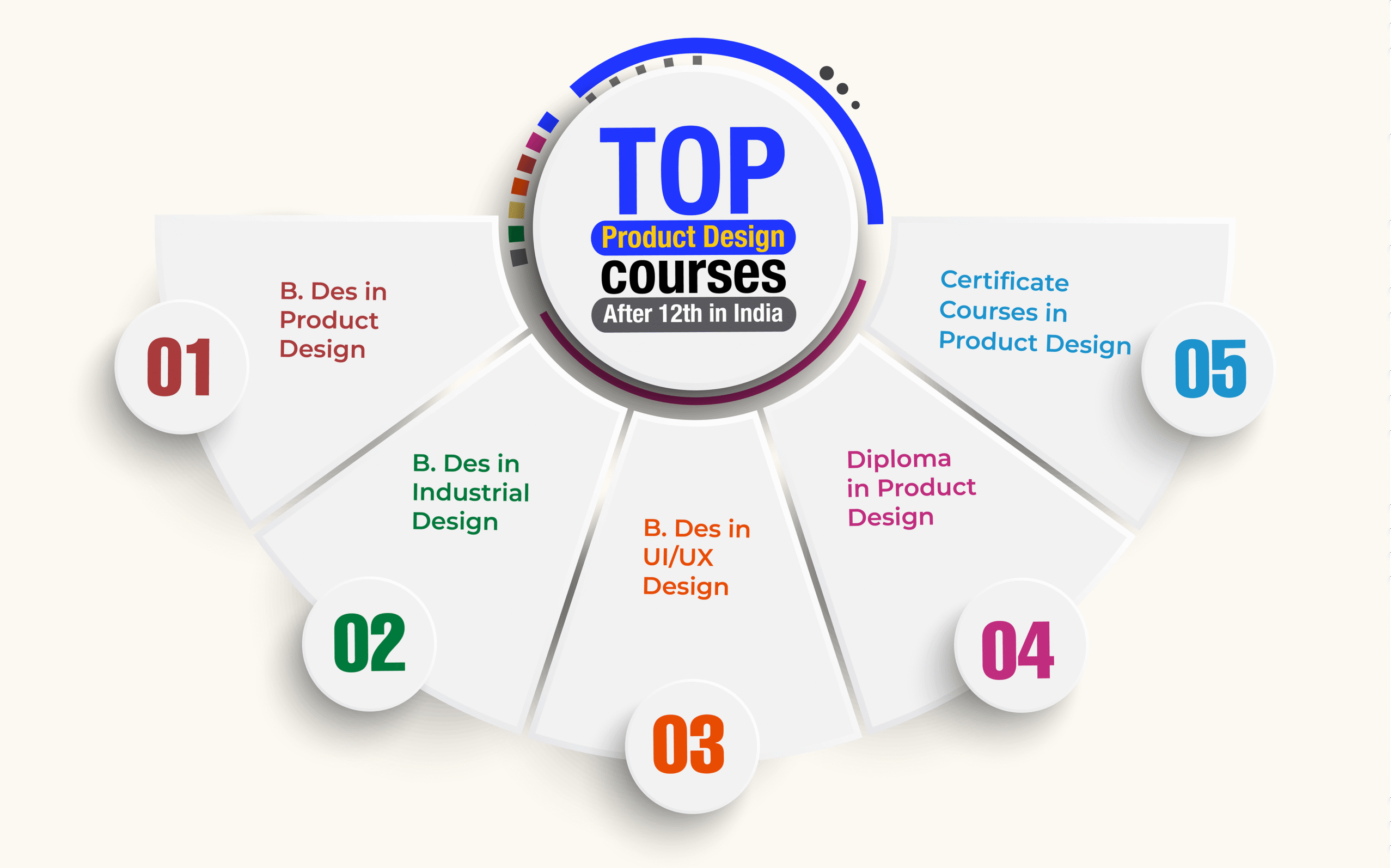
Best Product Design Courses After 12th
- B. Des in Product Design
- B. Des in Industrial Design
- B. Des in UI/UX Design
- Diploma in Product Design
- Certificate / Short-term Product Design Courses
Overview of Product Design Courses After 12th
| Course | Duration | Level | Focus Area | Career Outcome |
|---|---|---|---|---|
| B. Des Product Design | 4 Years | UG Degree | Physical + Digital Product Design | Product Designer |
| B. Des Industrial Design | 4 Years | UG Degree | Manufacturing & Ergonomics | Industrial Designer |
| B. Des UI/UX Design | 3-4 Years | UG Degree | Digital Interfaces & User Experience | UI/UX Designer |
| Diploma in Product Design | 1-2 Years | Diploma | Basics of Product Design | Junior Designer |
| Certificate Courses in Product Design | 3-6 Months | Short-Term Certification | Specialized Design Skills | Freelance / Entry-Level Roles |
What is Product Design?
Product design refers to the process of creating products that solve user problems effectively while being functional and visually appealing. It includes both physical products like furniture, electronics, appliances, and digital products like mobile apps and websites.
The field combines creativity with problem-solving, requiring designers to understand user needs, materials, technology, and usability. Students in product design courses learn how to create ideas, prototypes, and test solutions. Whether it’s a smart gadget or a mobile interface, product design plays a crucial role in shaping how people interact with products in daily life. For those interested in premium and high-end creations, pursuing a career in luxury product design can open opportunities in industries like fashion, jewelry, automobiles, and exclusive lifestyle brands.
What Do Students Learn in a Product Design Course?
A product design course combines creativity with technical knowledge to prepare students for designing products that are functional, user-friendly, and commercially viable. Throughout the programme, students learn how to identify user needs, generate ideas, develop prototypes, and improve products through testing and feedback.
Common subjects include:
- Design Thinking
- Product Sketching
- CAD Modelling
- Ergonomics
- Materials and Manufacturing
- User Research
- Rapid Prototyping
- Sustainability in Design
- Product Visualisation
- Portfolio Development
By the end of the course, students typically complete studio projects, internships, and a professional portfolio that showcases their design skills.
See If You’re Made for Design - Take the IMS DIA Design Aptitude Test
Register NowTop Product Design Courses After 12th in India
1. B. Des in Product Design
What is this course:
A professional undergraduate program focused on designing user-centric physical and digital products. It combines creativity, functionality, and problem-solving to develop products that solve real-world user needs.
Duration:
4-year full-time undergraduate program.
Eligibility:
Candidates must complete 10+2 from any stream. Admission is usually based on entrance exams like UCEED, NID DAT, or institute-specific tests.
Subjects Covered:
Design fundamentals, sketching, CAD (Computer-Aided Design), prototyping, materials and manufacturing, ergonomics, sustainability, user research, and design thinking. Students also work on live projects and build portfolios.
Skills You Will Learn:
Creative thinking, visualization, prototyping, user research, problem-solving, and technical skills using CAD and design tools.
Career Options:
Product Designer, UX Designer, Design Consultant, Innovation Specialist, Entrepreneur.
Career Reality & Salary Insight:
Entry-level salaries typically range from ₹4-10 LPA, depending on skills, portfolio quality, and institute.
Demand Insight:
With growing demand for both physical and digital products, product design is one of the fastest-growing design career fields.
Course Clarity (Important Difference):
Unlike Industrial Design (physical focus) and UI/UX (digital focus), Product Design covers both physical and digital product ecosystems.
Who Should Choose This Course:
Students who want a balance of creativity, technology, and problem-solving across industries.
2. B. Des in Industrial Design
What is this course:
A specialized design degree focused on designing physical products for mass production, with emphasis on usability, materials, and manufacturing processes.
Duration:
4-year undergraduate program.
Eligibility:
10+2 from any stream with entrance exams like UCEED, NID DAT, or institute-level tests.
Subjects Covered:
Product form development, ergonomics, material science, manufacturing processes, CAD modeling, sustainability, and user-centered design.
Skills You Will Learn:
Industrial sketching, 3D modeling, prototyping, material understanding, and production-oriented design thinking.
Career Options:
Industrial Designer, Product Developer, Furniture Designer, Automotive Designer.
Career Reality & Salary Insight:
Entry-level salaries range from ₹3-8 LPA, with higher growth in manufacturing and product-based industries.
Demand Insight:
Industrial design is essential in sectors like automotive, consumer electronics, and furniture, making it a stable and specialized career path.
Course Clarity (Important Difference):
Focused only on physical products, unlike Product Design (physical + digital) and UI/UX (digital-only).
Who Should Choose This Course:
Students interested in physical product creation, manufacturing systems, and engineering-driven design.
3. B. Des in UI/UX Design
What is this course:
An undergraduate program focused on designing digital products such as mobile apps, websites, and software interfaces with a strong emphasis on user experience.
Duration:
3-4 years undergraduate program.
Eligibility:
10+2 from any stream. Some institutes require entrance exams or portfolio evaluation.
Subjects Covered:
User interface design, user experience research, wireframing, prototyping, interaction design, usability testing, and tools like Figma and Adobe XD.
Skills You Will Learn:
User research, wireframing, prototyping, visual design, usability testing, and digital design thinking.
Career Options:
UI Designer, UX Designer, Product Designer (digital), Interaction Designer.
Career Reality & Salary Insight:
Entry-level salaries range from ₹5-12 LPA, with high growth potential in tech companies and startups.
Demand Insight:
With rapid growth in digital platforms, UI/UX design is one of the most in-demand and high-paying design careers.
Course Clarity (Important Difference):
Focused entirely on digital products, unlike Product Design (physical + digital) and Industrial Design (physical).
Who Should Choose This Course:
Students interested in technology, apps, and digital product experiences rather than physical products.
4. Diploma in Product Design
Overview:
A short-term program focused on building foundational product design skills, suitable for beginners or those seeking quicker entry into the field.
Duration:
1-2 years, depending on the institute.
Eligibility:
10+2 from any stream. Some institutes may require an entrance test or portfolio.
Skills You Will Learn:
Basic sketching, design principles, prototyping, CAD fundamentals, and introductory design thinking.
Career Scope:
Entry-level roles such as Junior Designer, Assistant Product Designer, or freelance opportunities.
Career Reality & Salary Insight:
Starting salaries usually range from ₹2-5 LPA, depending on skills and portfolio.
Demand Insight:
Diploma holders can enter the industry quickly, but long-term growth may require advanced skills or a degree.
Course Clarity (Important Difference):
Shorter and skill-focused compared to full B.Des degrees, but with limited depth.
Who Should Choose This Course:
Students looking for a quicker, affordable entry into product design or exploring the field before committing to a degree.
5. Certificate Courses in Product Design
Overview:
Short-term, skill-based programs available online and offline, focusing on specific areas such as UI/UX, CAD tools, or niche fields like luxury product design.
Duration:
Typically 3-6 months.
Eligibility:
Open to students and professionals; no strict academic requirements in most cases.
What You Learn:
Hands-on tools, portfolio building, real-world projects, and industry-relevant skills with minimal theoretical focus.
Career Scope:
Freelancing, internships, or skill enhancement for better job opportunities.
Career Reality & Salary Insight:
Income varies widely; freelancers and skilled candidates can earn ₹2-10 LPA depending on expertise.
Demand Insight:
Highly useful for quick upskilling in fast-growing areas like UI/UX and digital product design.
Course Clarity (Important Difference):
Focused on specific skills rather than full design education like B.Des programs.
Who Should Choose This Course:
Beginners exploring design, students building portfolios, or professionals looking to upskill quickly.
Product Design Degree vs Diploma vs Certificate
| Qualification | Duration | Best For | Career Outcome |
|---|---|---|---|
| B.Des Degree | 4 Years | Complete Product Design Education | Product Designer |
| Diploma | 1-2 Years | Practical Skills | Junior Designer |
| Certificate | 3-6 Months | Skill Development | Freelancer / Upskilling |
A bachelor’s degree is generally the preferred option for students planning long-term careers in product design because it offers deeper learning, industry exposure, internships, software training, and better placement opportunities. Diploma and certificate courses are more suitable for developing practical skills or entering the workforce in a shorter time.
Which Product Design Course is Best?
Choosing the best product design course depends on your career goals, interests, and the type of products you want to design. While all product design programmes develop creativity and problem-solving skills, each course focuses on a different area of design.
- B.Des in Product Design: Best for students who want to design both physical and digital products while gaining strong studio experience, internships, and portfolio development.
- B.Des in Industrial Design: Suitable for students interested in manufacturing, consumer products, furniture, automobiles, and production systems.
- B.Des in UI/UX Design: Ideal for students who want to build websites, mobile applications, software interfaces, and digital user experiences.
- Diploma in Product Design: Suitable for students looking for practical skills and quicker entry into the industry.
- Certificate Courses: Best for learning specialised software or design skills within a short duration.
For students seeking long-term career growth, a b des in product design generally provides the strongest academic foundation, industry exposure, and placement opportunities.
Eligibility for Product Design Courses After 12th
Students who have completed Class 12 from a recognised board are eligible to apply for most product design courses in India. Candidates from Science, Commerce, and Arts streams can pursue B.Des, diploma, or certificate programmes, although specific eligibility requirements may vary across institutions.
Many reputed design colleges conduct entrance examinations such as UCEED, NID DAT, or institute-specific aptitude tests to assess creativity, logical reasoning, observation skills, and design thinking. Some colleges may also evaluate a portfolio or conduct a personal interview during the admission process.
Students interested in product design should have strong creativity, curiosity, problem-solving ability, visualisation skills, and an interest in understanding user needs. While drawing skills are helpful, they are not mandatory for admission to most programmes.
Top Colleges for Product Design Courses in India in 2026
Choosing the right college is crucial for building a strong foundation and portfolio. Some of the top institutes offering product design courses in India include:
- IMS Design & Innovation Academy (IMS DIA)
- National Institute of Design (NID)
- IITs (through UCEED)
- National Institute of Fashion Technology (NIFT)
- Private design institutes across India
Always evaluate faculty, curriculum, industry exposure, and placement support before selecting a college.
Confused which exam to choose? Talk to a counselor
Get a Call BackEntrance Exams for Product Design Courses in 2026
- IMS DIA DET: Entrance test for design programs assessing creativity, logical thinking, and design aptitude.
- NID DAT: Conducted by the National Institute of Design; evaluates design thinking, sketching, and problem-solving skills.
- UCEED: Undergraduate Common Entrance Exam for Design; accepted by top IITs for B. Des admission.
- NIFT: Entrance exam for National Institute of Fashion Technology; includes design aptitude and creative ability tests.
- CEED: Postgraduate level exam for design aspirants; useful for awareness of higher studies after UG.
These are some of the most important design entrance exams in India that students should consider when planning a career in product or creative design fields.
Fees for Product Design Courses in India in 2026
- Government colleges: ₹50,000 – ₹2,50,000 per year
- Private colleges: ₹2,00,000 – ₹6,00,000 per year
- Diploma courses: ₹50,000 – ₹2,00,000 total
Product design courses fees vary based on institute, facilities, and course level. Some product design colleges in Noida and other cities may have different fee structures.
Career Scope After Product Design Courses
After completing product design courses, students can explore diverse career paths across industries.
- Product Designer: Designs physical or digital products; salary ₹4-12 LPA
- UI/UX Designer: Works on apps and websites; salary ₹5-15 LPA
- Industrial Designer: Focuses on manufacturing and product systems; salary ₹4-10 LPA
- Design Researcher: Studies user behavior and insights; salary ₹5-12 LPA
With experience, professionals can move into leadership roles, consulting, or entrepreneurship. The demand is growing due to increasing focus on user experience in both physical and digital products.
Top Recruiters for Product Design Graduates
Product designers are recruited by organisations across manufacturing, technology, digital services, consumer products, and innovation consulting.
Some leading recruiters include:
- Tata Elxsi
- Samsung
- Philips
- Whirlpool
- Havells
- Godrej
- IKEA
- TCS
- Accenture Song
- Deloitte Digital
- Design consultancies
- Product startups
Hiring depends on portfolio quality, internships, technical skills, and problem-solving ability rather than academic qualifications alone.
Skills Required for Product Designing in 2026
To succeed in product design courses, students need a mix of creative and technical skills. Creativity helps in ideation, while problem-solving ensures practical solutions. Sketching and visualization are essential for communicating ideas.
Design thinking is crucial to understand user needs and build effective products. Knowledge of software tools like CAD, Figma, or Adobe tools is also important. Strong observation, research, and communication skills further enhance a designer’s ability to create impactful products. To further boost efficiency and innovation, students can also explore 10 AI tools for designers that assist with ideation, prototyping, and visual creation.
Software You Will Learn During Product Design Courses
Modern product design relies on specialised software for concept development, modelling, prototyping, rendering, and user interface design.
Students commonly learn:
- AutoCAD
- SolidWorks
- Rhino 3D
- Fusion 360
- Blender
- KeyShot
- Figma
- Adobe Photoshop
- Adobe Illustrator
Practical experience with these tools improves technical proficiency, portfolio quality, and placement opportunities.
How to Choose the Right Product Design Course After 12th
Before selecting a product design course, compare the curriculum, studio facilities, faculty expertise, industry collaborations, internship opportunities, software training, and placement support offered by different institutes.
You should also consider the area of specialisation that interests you:
- Choose Product Design if you want to work on both physical and digital products.
- Choose Industrial Design if you are interested in manufacturing and consumer products.
- Choose UI/UX Design if you want to build websites, mobile applications, and digital experiences.
Review student portfolios, placement records, and industry projects before making your final decision.
See If You’re Made for Design - Take the IMS DIA Design Aptitude Test
Register NowConclusion
Product design courses after 12th in India offer multiple pathways, including B. Des degrees, diploma programs, and short-term certification courses. With increasing demand for both physical and digital product design, students can explore diverse career opportunities across industries such as technology, manufacturing, and design consulting.
Before choosing a product design course, compare the curriculum, faculty expertise, industry collaborations, internship opportunities, software training, and placement support offered by different colleges. If you are planning to study at a design institute in Noida, evaluate its studio facilities, live projects, industry exposure, and placement record before making your decision. A programme that combines practical learning with real-world projects and portfolio development will prepare you for diverse career opportunities in product design, industrial design, and digital product development.
FAQs
1. What are the best product design courses after 12th in India?
The best product design courses after 12th in India include B. Des in Product Design, B. Des in Industrial Design, and B. Des in UI/UX Design. Students can also opt for diploma in product design or short-term certification courses based on their career goals and duration preference.
2. Which course is required to become a product designer after 12th?
To become a product designer after 12th, a B. Des in Product Design is the most preferred course as it provides in-depth knowledge of design principles, prototyping, and user-centered design. Diploma and certification courses can also help build skills for entry-level roles.
3. What is the salary of a product designer in India?
The starting salary of a product designer in India typically ranges from ₹4 LPA to ₹12 LPA, depending on skills, portfolio, and college. With experience, salaries can grow significantly, especially in UI/UX and digital product design roles.
4. What is the difference between product design, industrial design, and UI/UX design?
Product design involves creating both physical and digital products. Industrial design focuses on designing physical products for manufacturing, such as furniture or appliances. UI/UX design deals with digital interfaces, including mobile apps and websites, focusing on user experience and usability.
5. What is the eligibility for product design courses after 12th?
Students must complete their 12th standard from any stream (Science, Commerce, or Arts) to apply for product design courses. For degree programs like B. Des, entrance exams such as UCEED, NID DAT, or institute-level tests may be required, while diploma and certificate courses have simpler admission criteria.
