
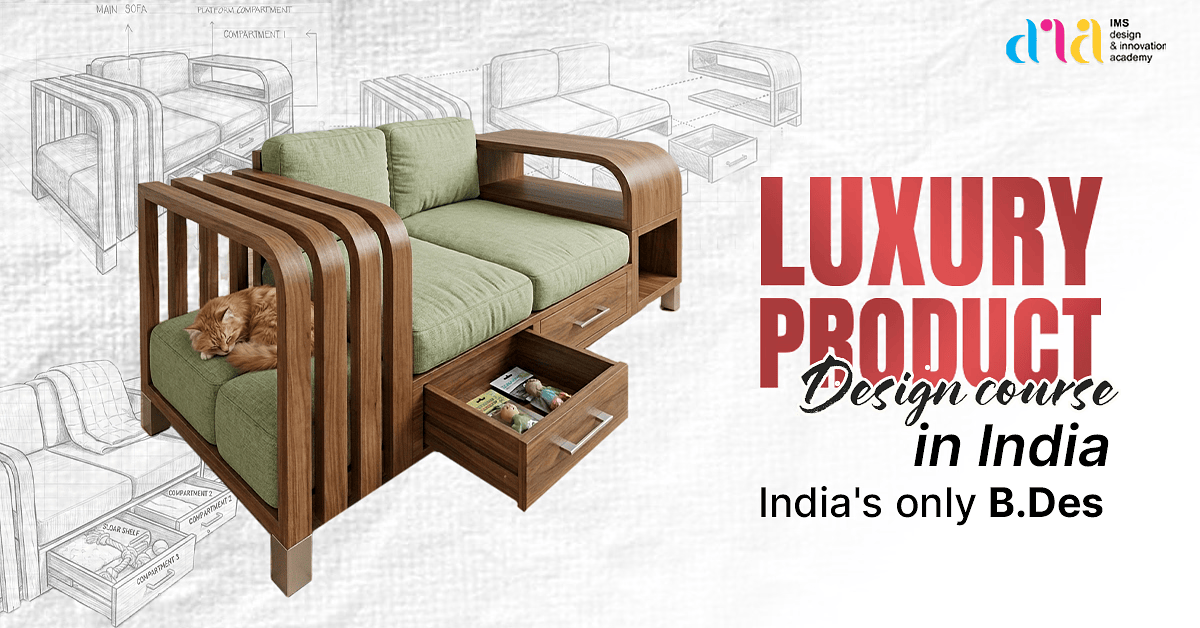
Choosing a design career requires consideration of emerging industries, specialized skills needs, future market demand, and educational opportunities. With the growing preference of global consumers with products that provide superb craftsmanship, innovation, exclusivity and unforgettable experiences, luxury product design has become one of the most specialized and futuristic fields in the design industry.
Aesthetics is not the only thing that luxury brands compete on; they are also competing based on storytelling, sustainability, personalization, material innovation, and customer experience. This change has led to the need to have professionals who are aware of the peculiar principles that characterize luxury products and luxury consumers.
To students who want to acquire a specific design training, a luxury product design institute in India is a special chance to acquire expertise in this discipline that is on the rise. Interestingly, IMS DIA offers India’s only B. Des in Luxury Product Design, a program specifically designed to prepare students for careers in the evolving luxury design ecosystem.
This blog will discuss the extent, curriculum, employment prospects, and benefits of undertaking a degree in luxury product design in India.
What is Luxury Product Design?
Luxury products design aims at designing products with an outstanding value based on craftsmanship, exclusivity, innovation, quality, aesthetics, and emotion.
Luxury products are developed to bring a memorable experience, symbolize prestige, and, unlike more traditional products, do not focus on functionality, but on building deeper emotional attachment to consumers.
Luxury designers carefully consider:
- Premium materials
- Exceptional craftsmanship
- Brand heritage
- Consumer psychology
- Personalization
- Sustainability
- User experience
- Innovation and exclusivity
The discipline combines elements of industrial design, fashion, branding, consumer behavior, material innovation, and design strategy.
Industries That Rely on Luxury Product Design
Luxury product design plays a critical role across several sectors.
Luxury Fashion and Accessories
Designers contribute to:
- Handbags
- Watches
- Eyewear
- Premium accessories
- Limited-edition collections
Jewellery and Precious Goods
Luxury product designers work on:
- Fine Jewellery
- High-value collectibles
- Designer ornaments
- Luxury gifting products
Automotive Design
Premium automotive brands increasingly focus on luxury user experiences, customization, and sophisticated design language.
Home and Lifestyle Products
Luxury interiors and lifestyle brands require designers capable of developing premium furniture, décor products, and bespoke solutions.
Hospitality and Experiences
Luxury hotels, resorts, and lifestyle brands rely on designers who understand experiential design and consumer engagement.
Emerging Luxury Technology
High-end consumer electronics and smart lifestyle products represent a growing area of luxury-focused innovation.
Luxury Product Design vs Traditional Product Design
While both disciplines share common design foundations, their objectives and design approaches differ significantly.
| Aspect | Luxury Product Design | Traditional Product Design |
|---|---|---|
| Primary Goal | Exclusivity and premium experiences | Functionality and usability |
| Consumer Focus | Emotional connection, prestige, and brand value | Problem-solving, convenience, and accessibility |
| Material Selection | Premium, rare, and specialized materials | Cost-effective, durable, and widely available materials |
| Production Scale | Limited editions, bespoke products, or selective production | Large-scale mass production |
| Brand Influence | Strong emphasis on heritage, craftsmanship, and brand identity | Moderate emphasis on branding and market positioning |
| Pricing Strategy | High-value and premium pricing | Broad market accessibility and competitive pricing |
| Design Process | Experience-led and emotion-driven design | Function-led and utility-focused design |
| Market Position | Niche luxury and premium segments | Mainstream consumer markets |
As luxury industries expand globally, specialized knowledge has become increasingly important for designers entering this sector. Understanding the difference between product design vs luxury product design helps aspiring designers develop the skills, craftsmanship, and strategic thinking required to create premium products and exclusive brand experiences.
Get Started Today: Our Counselors are Just a Click Away
Get a Call BackIndia's Only B. Des in Luxury Product Design
Never before has the design industry been as specialized as it is today. While general product design courses provide foundational knowledge, luxury markets require professionals with a deeper understanding of premium consumer behavior, luxury branding, craftsmanship, innovation, and experience design.
To meet this requirement, IMS Design and Innovation Academy (IMS DIA) offers India’s only B.Des in Luxury Product Design, providing students with a specialized pathway into the rapidly expanding global luxury design industry. For students exploring career-focused design programs through a B.Des admission guide, this unique course offers an opportunity to develop industry-relevant skills tailored to the luxury sector.
Why a Specialized Luxury Product Design Degree Matters
Luxury markets operate differently from mainstream consumer industries.
Designers working in luxury sectors must understand:
- Consumer aspirations
- Premium materials
- Heritage and storytelling
- Exclusivity strategies
- Luxury retail ecosystems
- Personalization trends
- Sustainability in luxury markets
A specialized luxury product design degree allows students to develop these competencies from the beginning of their academic journey rather than attempting to acquire them later through industry experience.
As luxury industries continue to evolve, employers increasingly value candidates who already understand the nuances of luxury design thinking.
What Students Learn in the Program
A comprehensive luxury product design program goes beyond traditional product development methodologies.
Students are exposed to areas such as:
- Design fundamentals
- Product innovation
- Luxury consumer behavior
- Material exploration
- Design research
- Trend forecasting
- Product styling
- Branding principles
- Design strategy
- User experience design
They learn how to create products that balance aesthetics, functionality, exclusivity, and emotional appeal.
The curriculum typically encourages both creative exploration and practical application.
Interdisciplinary Approach to Luxury Design
Modern luxury design exists at the intersection of multiple disciplines.
Students benefit from exposure to:
- Product design
- Fashion influences
- Lifestyle trends
- Consumer psychology
- Visual communication
- Design strategy
- Branding and storytelling
This interdisciplinary approach reflects real-world luxury industries, where successful products often combine expertise from multiple design domains.
Focus on Innovation, Craftsmanship, and Consumer Experience
Luxury consumers increasingly expect more than premium materials.
They seek:
- Personalized experiences
- Meaningful design stories
- Sustainable innovation
- Superior craftsmanship
- Emotional engagement
A specialized luxury design curriculum emphasizes how these factors influence product development and market success.
Students learn to evaluate products not only based on appearance but also through experience, perception, and value creation.
Industry Exposure and Practical Learning
Design education becomes more meaningful when classroom learning is connected to industry realities.
Practical learning opportunities may include:
- Industry workshops
- Design challenges
- Expert sessions
- Collaborative projects
- Design research assignments
- Material experimentation
Such experiences help students understand professional workflows and market expectations.
Portfolio Development Through Design Projects
A strong portfolio is often one of the most important assets for aspiring designers.
Throughout a specialized luxury product design course, students work on projects that demonstrate:
- Concept development
- Research capabilities
- Design thinking
- Technical execution
- Innovation skills
These projects are added to a professional portfolio which is useful in the internship, higher education applications, and job prospects.
IMS DIA B.Des in Luxury Product Design is designed around these dynamic industry needs, integrating design basics, applied learning, interdisciplinary exposure, and portfolio-building opportunities to train students to work in specialized jobs in luxury-oriented industries.
Ready to Take Admission in Top Luxury Product Design College?Get Admission Guidance
Get Admission HelpCore Skills Developed Through a Luxury Product Design Program
Students pursuing a luxury product design degree typically develop a combination of creative, technical, and strategic competencies.
Design Thinking
Students learn structured approaches to problem-solving and innovation.
Consumer-Centric Design
Understanding luxury consumer expectations becomes a critical component of the design process.
Material Knowledge
Exposure to premium materials helps students evaluate quality, aesthetics, sustainability, and performance.
Visual Communication
Designers must effectively communicate concepts through sketches, presentations, and digital visualization.
Research and Trend Analysis
Luxury markets evolve rapidly, making research and trend forecasting essential skills.
Branding Awareness
Students understand how products contribute to larger brand narratives and consumer perceptions.
Innovation Management
The ability to generate new ideas while maintaining brand identity becomes increasingly valuable in the luxury sectors.
Who Should Pursue a B. Des in Luxury Product Design?
A B. Des in Luxury Product Design can be suitable for students who:
- Have completed Class 12 from a recognized board
- Enjoy creativity and design exploration
- Are interested in premium products and lifestyle industries
- Appreciate craftsmanship and material innovation
- Want a specialized design career pathway
- Enjoy combining aesthetics with user experience
- Are interested in branding and consumer behavior
Students from Science, Commerce, and Arts backgrounds can explore opportunities within this field.
Career Opportunities After a Luxury Product Design Degree
Graduates can pursue diverse roles across luxury and premium market segments.
- Luxury Product Designer: Create innovative products for luxury brands and premium consumer markets.
- Design Strategist: Develop product strategies aligned with market trends and consumer expectations.
- Product Development Specialist: Coordinate product concepts from design stages through production.
- Luxury Brand Consultant: Support luxury brands with design, innovation, and market positioning initiatives.
- Entrepreneur: Launch independent luxury product ventures or boutique design brands.
As luxury markets expand globally, career in luxury product design continue to emerge across multiple sectors.
Why Choose a Specialized Luxury Product Design Program Instead of a Generic Design Degree?
Choosing a specialized program offers several advantages for students seeking focused expertise.
Industry-Specific Curriculum
Students gain knowledge tailored to luxury market requirements rather than broad-based design exposure alone.
Niche Expertise
Specialized education helps students build deeper understanding of premium products, luxury consumers, and emerging industry trends.
Stronger Portfolio Differentiation
Projects focused on luxury design challenges can help portfolios stand out in competitive recruitment environments.
Exposure to Luxury-Focused Design Challenges
Students explore design problems specific to luxury industries, including exclusivity, personalization, sustainability, and experience design.
Admissions Open for Luxury Product Design Courses!
Secure Your Seat With Just a Click
Conclusion
The luxury industry is experiencing a major transformation due to evolving consumer expectations, technological advancements, sustainability initiatives, and the growing demand for personalized experiences. As a result, organizations are seeking professionals who understand the unique principles that define luxury products and premium consumer markets.
A course in luxury product design in India provides an excellent pathway into this dynamic sector for students who wish to combine creativity, innovation, craftsmanship, and strategic thinking. Studying at a reputed design institute in India can help aspiring designers gain the industry-focused knowledge and practical skills required to succeed in luxury markets.
The only B.Des in Luxury Product Design offered by IMS DIA in India provides a distinctive educational experience for aspiring designers seeking specialized exposure to luxury-focused design practices, portfolio development, industry interactions, and interdisciplinary learning. As luxury industries continue to expand globally, specialized education can serve as a strong foundation for long-term career growth and professional distinction.
FAQs
What is Luxury Product Design?
Luxury Product Design is the art of designing high quality products based on high quality, craftsmanship, exclusivity, innovation, beauty and consumer experience. It is a blend of design thinking and luxury market insights.
How is Luxury Product Design different from Product Design?
In traditional product design, the main component of product design is functionality and usability, whereas in luxury product design the major component is emotional appeal, premium experience, exclusivity, craftsmanship and brand value in addition to functionality.
Is there a B. Des in Luxury Product Design in India?
Yes. IMS Design and Innovation Academy (IMS DIA) is the only Indian institution that provides a B. Des in Luxury Product Design and is specialized in luxury-oriented design business.
Who can apply for a Luxury Product Design course?
Applicants should have successfully finished Class 12 on a recognized board. Grants of the Science, Commerce and Arts backgrounds might be eligible based on institutional requirements.
What skills are required for Luxury Product Design?
The most important ones are design thinking creativity, visual communication, research, trend analysis, understanding of materials, consumer awareness, problem-solving, innovation, and admiration of craftsmanship and high-quality experiences.
